Meaning Behind Dream Catcher: Origin, Symbol, and Careful Context
Understand the meaning behind dream catcher symbolism, origin context, common parts, respectful use, and limits on dream-interpretation claims.
Quick Answer: The meaning behind dream catcher symbolism is usually explained through protective web, hoop, feather, and sleep associations, but the object has specific Indigenous cultural contexts and should not be reduced to a universal dream cure.
Dream catcher meaning facts
- Object
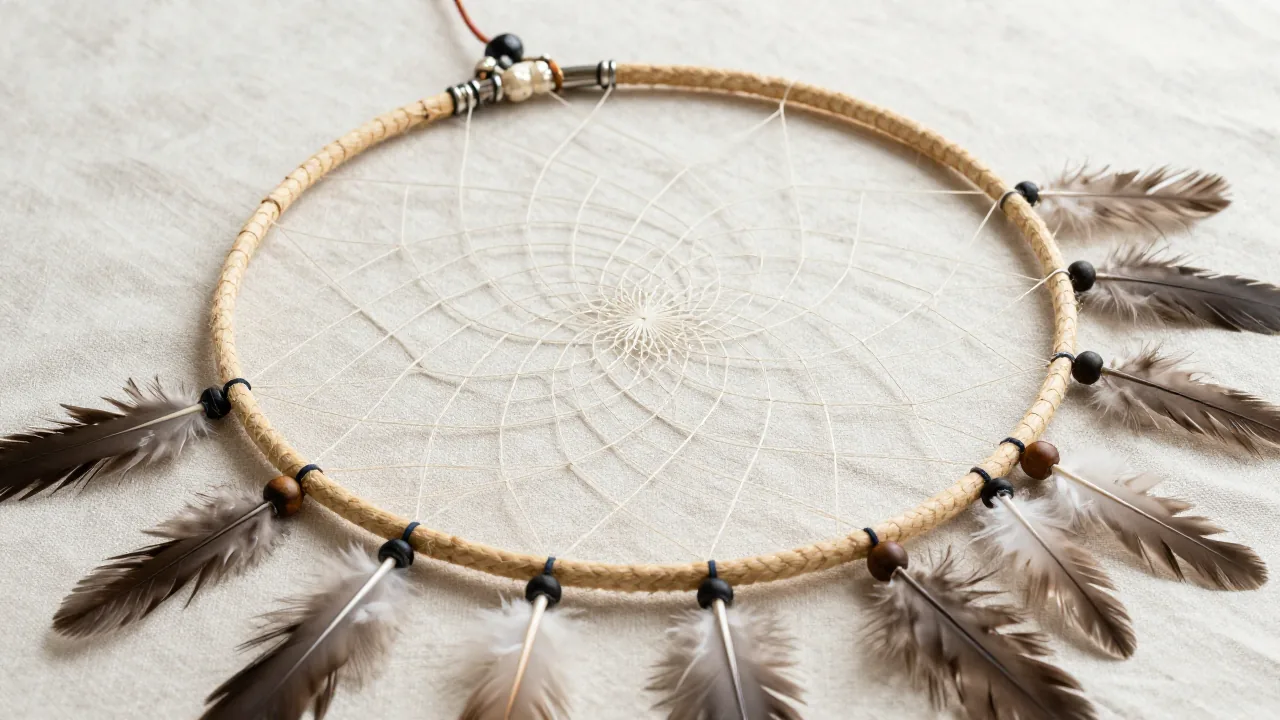
- A hoop, web, feathers, and beads are common visible parts.
- Context
- Origins are commonly associated with Ojibwe and broader Indigenous contexts.
- Popular meaning
- Often described as protection around sleep and dreams.
- Limit
- It is not a universal cure or diagnostic tool.
- Respect
- Source context matters before using or explaining the object.
Separate the object from a dream dictionary answer
The meaning behind dream catcher searches often mix two questions: what the object symbolizes, and what it means if one appears in a dream. Those are related but not identical.
As an object, a dream catcher is usually explained through protection, filtering, sleep, and care. In a dream, it may also reflect the dreamer's own memory, culture, room setting, or feelings.
Keeping those questions separate prevents the article from pretending that one symbol always means the same thing for every person.

Name the cultural context before the parts
Dream catchers are commonly linked with Ojibwe and wider Indigenous histories, though modern commercial use often removes that context. A careful explanation should not begin with decoration alone.
The hoop, web, feather, and bead language is easier to understand after the reader knows the object is culturally situated. Without that note, the symbolism can become flattened.
If you are writing, teaching, or buying one, look for sources that name community, maker, or cultural setting instead of relying only on vague mystical wording.
Read the web and hoop as protective imagery
In popular explanation, the web is often described as filtering or catching harmful dreams, while the hoop can suggest wholeness or a protected sleeping space.
Those meanings are symbolic descriptions, not scientific sleep claims. The object may be meaningful to someone while still not functioning as a medical or mental-health treatment.
A respectful summary uses careful verbs: associated with, described as, or understood in some traditions. It should avoid promising protection as a guaranteed result.
Interpret a dream catcher in a dream by context
If a dream catcher appears inside a dream, start with its setting. Is it above a bed, broken, gifted, handmade, commercial, distant, or close?
Also record the feeling around it. Comfort, unease, guilt, nostalgia, or curiosity can matter more than the object alone.
A practical record can include who was present, whether the room felt safe, and what happened just before waking. Those details keep the symbol attached to the dreamer's actual scene instead of a copied dictionary line.
The object may point to protection, boundaries, sleep concerns, memory, or cultural questions, but those meanings should remain prompts rather than fixed answers.

Use the symbol without overclaiming
A good explanation can honor the symbol without turning it into a universal dream machine. Name the context, describe common symbolism, and leave room for personal association.
If dreams are distressing, recurring, or disrupting sleep, the better next step is qualified support rather than relying on an object meaning.
That boundary keeps the article useful for readers while avoiding health, trauma, or future-event claims.
Dream catcher context record
- Decide whether you mean the object or a dream appearance.
- Name cultural source context when possible.
- Describe parts as symbolism, not guarantees.
- Record the dream setting and emotion.
- Seek support if dreams repeatedly disturb sleep.
Dream catcher meaning questions
What is the meaning behind dream catcher symbolism?
It is commonly connected with protective sleep imagery, but cultural context matters.
Is a dream catcher a universal symbol?
No. Meaning varies by source, maker, community, and personal association.
What if I dream about a dream catcher?
Record where it appeared, how it looked, and how you felt before interpreting it.
Can it improve sleep?
This page does not make medical or sleep-treatment claims.
How can I explain it respectfully?
Name source context and avoid treating the object as generic decoration.