Dream About Losing Your Phone: Avoid Treating It as a Warning
Interpret a dream about losing your phone by recording the setting, search, ending, and mood, then compare ordinary context without treating it as a warning.
A dream about losing your phone does not predict theft, bad news, or disconnection. Record where the phone went missing, what you did, how the dream ended, and the strongest feeling. Then compare those details with current communication, access, privacy, or ordinary stress without assuming a hidden cause.
Lost-phone dream evidence boundaries
- Prediction boundary
- The dream does not prove theft, bad news, disconnection, or a future event.
- Scene detail
- The location of the missing phone changes which context question is useful.
- Action difference
- Misplacing, searching, recovering, and deliberately putting a phone away are different dream actions.
- Mood cue
- Urgency, embarrassment, relief, irritation, or calm should be recorded before interpretation.
- Waking evidence
- Current messages, deadlines, privacy concerns, and access problems can be checked directly without assuming a hidden cause.
The mistake: treating a missing-phone dream as a warning
A lost phone can make a dream feel urgent because a phone holds practical access to messages, directions, schedules, and other people. That urgency does not turn the scene into advance notice. The dream cannot show that a device will be stolen, bad news is coming, or a relationship will break down.
Dreams can draw on a recent search for an object, an unanswered message, a charging problem, a busy day, a film scene, or a body sensation during sleep. A context-first reading keeps several ordinary possibilities open instead of forcing one dramatic symbol code.
Record whether the phone was misplaced, searched for, or abandoned
Write the action as precisely as possible. Was the phone forgotten at a doorway, dropped between cushions, taken by another person, impossible to unlock, recovered at the end, or intentionally left behind? Record the place, the people present, the strongest feeling, and the final scene.
Misplacing an object is not the same action as searching for it, and searching is not the same as choosing to disconnect. Those differences give the memory useful shape. Four short lines about setting, action, mood, and ending are more reliable than a generic lookup label.

Compare communication and access context with the dream
Place the dream beside current facts. Have messages piled up, has a login or device problem interrupted access, are you waiting for a reply, or have notifications made rest difficult? These are comparison questions, not hidden explanations. List two facts that support an association and one fact that complicates it.
The comparison may point to an ordinary concern about availability, privacy, or communication, or it may reveal no useful link. Either result is acceptable. A dream record can support reflection without pretending to measure another persons intentions or diagnose a problem.

Check the ending before assigning a fixed phone symbol
The ending often changes the most useful question. Finding the phone may shift attention toward relief or regained access. Giving up the search may suggest fatigue with the task inside the dream. Placing the phone aside voluntarily may make rest or boundaries more relevant than loss.
None of these endings has a universal meaning. Personal associations and recent experiences matter, and even a close association remains a prompt rather than proof. Avoid translating one object into a fixed verdict about connection, isolation, control, or identity.
Choose one waking action without obeying the dream
If the dream highlights a waking issue, choose one ordinary, reversible action. Back up a device, check a travel plan, answer one important message, silence notifications for a set period, or speak directly with the person involved. The action should respond to current evidence, not obey an imagined warning.
Keep medical, legal, financial, safety, and mental-health decisions outside dream interpretation. Persistent distress can be discussed with an appropriate professional. A dream may be memorable and personally meaningful without being made responsible for an outcome.
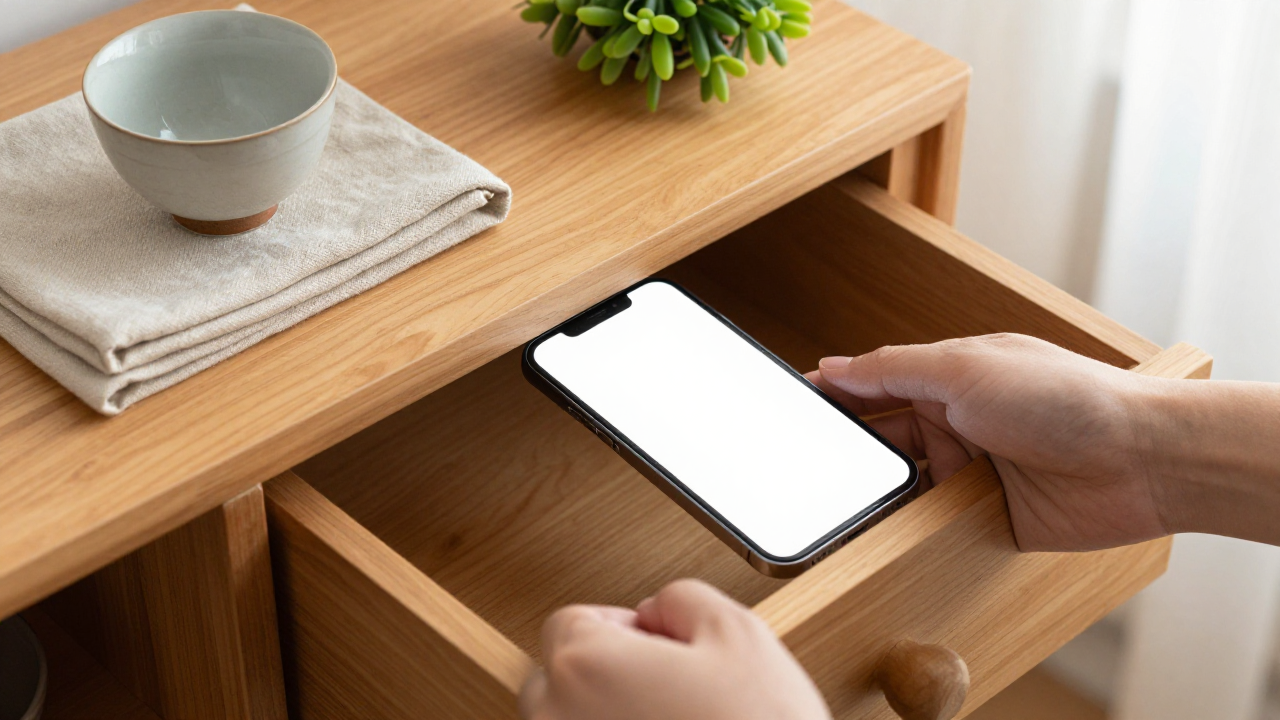
Five details to preserve from a lost-phone dream
- Record the location and the exact action before choosing a theme.
- Name the strongest feeling and how the dream ended.
- Separate searching for connection from deliberately choosing a break.
- Compare the scene with two current facts and one complicating fact.
- Use direct evidence and communication for any real decision.
Questions about missing phones in dreams
What does it mean to dream about losing your phone?
It can prompt reflection on the remembered setting, action, mood, and current context, but it has no fixed meaning and predicts nothing.
Is a lost-phone dream a bad sign?
No. A vivid search scene is not evidence that loss or bad news will occur.
Can the dream mean I feel disconnected?
It may prompt that question, but it cannot prove disconnection. Compare the scene with current communication facts.
Should I change a real decision because of the dream?
No. Use direct information, conversation, and appropriate support for real decisions.